
- Further articles
-
The FinTech (R)Evolution -
Different cities, different solutions, same goal: smartness in our homes -
Smart City – Urban Development and Digital Change
Seatropolis
07.10.2016
By Anita Bulindi, Daria Tcaplina, Jonathan Rincon and Marie-Sophie Petersen
Hamburg, Germany
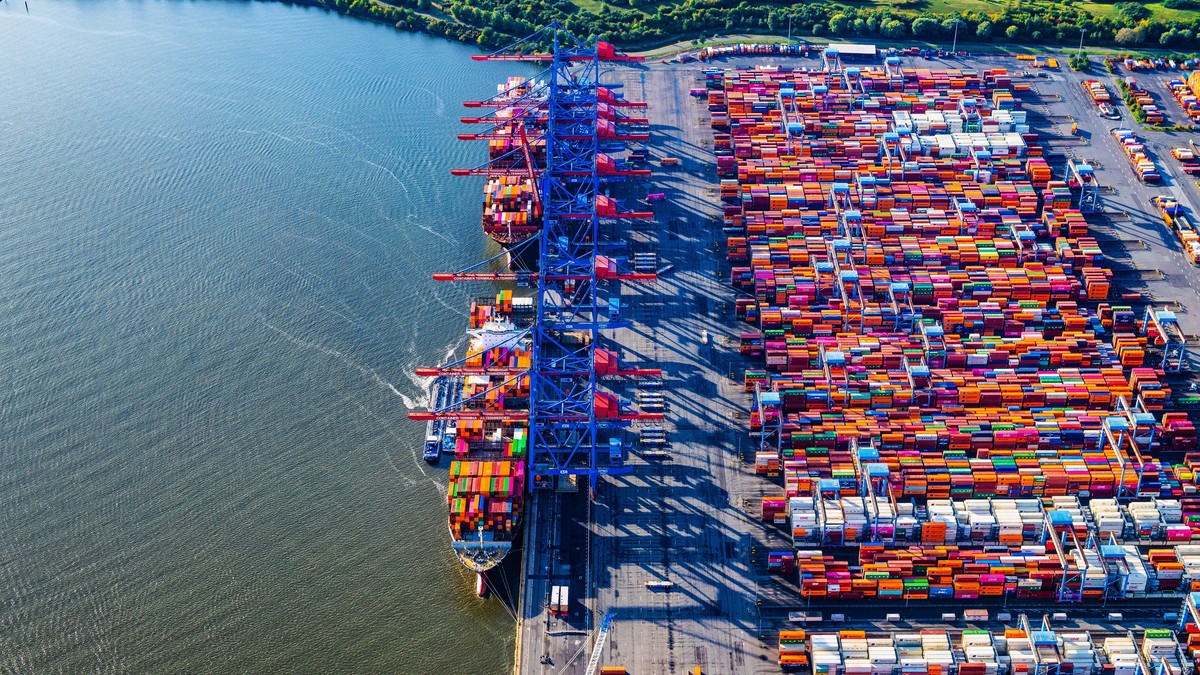
In Hamburg, they have one smart network for collaboration, connecting people and data. Here, where about 10,000 ships a year come in and out, they’ve got the challenge to get more and more containers through the port. By 2025, the port will need to handle 15-17 million containers a year! Modern technology, such as GPS sensors in the containers, could optimize the workflows and capacities in the port. On the way to become „Seatropolis“, the port of Hamburg has about 800 sensors integrated in streets, buildings, equipment and rails that give the Port Management Operator automatically feedback when a problem occurs. And this helps not only to reduce attrition, but also to make the traffic flow more economical and ecologial.
Saint Petersburg, Russia
The government of St. Petersburg is actively engaged in the development of the seaport. Over the past few years, they have implemented a number of projects that improve the quality and speed of the port. In 2016, the seaport of St. Petersburg spent 132.9 million rubles, which is 3.5 more than in the same period last year for realization of the development program. The funds will be used for the technical re-equipment of terminals and for the modernization of storage facilities. The main goal is to reduce the pollution at the port and its nearest areas with Smart Infrastructure systems. The program involves the construction of sewage treatment plants, the connection between the seaport terminals and the protection of the existing resources to comply with international standards.
Dar es Salaam, Tanzania
The port of Dar es Salaam is embarking on many projects in order to increase the seaport capacity to match the demand which has appeared to be greater than the available capacity due to diffuclities in its expansion as it is built within the city limits. The port has different terminals for different cargos such as the grain cargo terminal and the mobile/vehicle cargo terminal which have specialized equipments for the cargo on load and off load activities. The Tanzania Port Authority is working on a project to deepen and strengthen the depth and width of the port so as to accommodate bigger ships, increasing internal infrastructure such as roads and railways towards the port to modify transportation and increase reliability in the movement of cargo. In the next five to six years, the port of Dar es Salaam will become a port that can be called a harbour where bigger ships and more cargo can be accommodated in a more advanced technological manner.
This reportage is part of a student exchange program of HAW Hamburg, University of Dar es Salaam, and University of St. Petersburg.
- SHARE
- Google+